
Same life. Stronger you.

Stronger
movement
for what's next.

A 30-minute yoga and calisthenics routine for people with spinal fusions, spinal cord injuries, and spine surgeries.

Start the routine →
30 minTotal time
4 phasesSimple flow
3 daysA week
6 fused levels (T4–L2) · 12 screws
Anthony, the creator of this routine, in the gym
Spine neutralNo crunches, no twists
Real exercisesSafe, effective, sustainable
All levelsModify to your range
Share freelyBuilt to help others

The 30-minute routine

4 simple phases

A spine-safe flow to build a stronger chest, core and overall resilience, without crunches, twists, or risky movements.

Full routine · about 30 minutes

The routine

1. Warm-up · 5 min

  • Cat-cow, kept small: 8 reps
  • Glute bridges: 12 reps
  • Bird dogs: 8 per side, slow

2. Chest · 3 rounds

  • Push-ups: 8–12 reps, 3-second lowering (use incline push-ups with hands on a bench if form slips)
  • Diamond or wide push-ups: 6–10 reps
  • Rest 45 seconds

3. Core · 3 rounds

  • Dead bugs: 10 per side
  • Front plank with shoulder taps: 30–45 sec
  • Side plank: 30 sec per side
  • Hollow-body hold: 20 sec, lower back stays pressed down
  • Rest 30 seconds

4. Stretch · 7 min

  • Hamstring stretch lying down with a strap: 45 sec per leg
  • Half-kneeling hip flexor stretch: 45 sec per side
  • Figure-4 glute stretch lying down: 45 sec per side
  • Doorway chest stretch: 45 sec
  • Child's pose with arms extended: 60 sec

Progression

Every couple of weeks, add a few reps or 10 seconds to the holds, as long as your form stays solid and nothing pinches.

Moves to avoid

These round or twist the spine under load:

  • Crunches
  • Sit-ups
  • Russian twists
  • Deep spinal twists
  • Standing toe touches (try the lying strap hamstring stretch instead)

Video demos

Exercises

Heads up: these demos may show more range of motion than a fused spine allows. Keep your movements small and stay in a range that feels comfortable.

Warm-up

Cat-cow (keep it small)
Video: Hinge Health on YouTube
Glute bridge
Video: Hinge Health on YouTube
Bird dog
Video: Hinge Health on YouTube

Core

Stretch

Strap hamstring stretch
Video: AskDoctorJo on YouTube
Half-kneeling hip flexor stretch
Video: HSS on YouTube
Figure-4 stretch
Video: Catalyst Physical Therapy & Wellness on YouTube
Doorway chest stretch
Video: MedBridge on YouTube
Child's pose, arms extended
Video: Rehab My Patient on YouTube

All videos belong to their creators and are embedded from YouTube.

My story

6 fused levels.
12 screws.
Still moving.

About ten years ago, a drunk driver hit me while I was stopped at a red light. The damage to my spinal cord was so severe that my surgeon told me he didn't know how I wasn't paralyzed. By the grace of God, I'm still here.

Three surgeries later, I have 12 screws in my spine, 8 in my thoracic and 4 in my lumbar. I live with severe neuropathy from the nerve damage. Some days the pain is manageable. On the worst days, walking is a struggle.

I'm not sharing this for sympathy. I'm sharing it because if you're dealing with something like this, or something worse, I want you to know your life isn't over. It's different, and you can still get stronger.

Fused & Strong is the routine I built for my own body. It's spine-safe yoga and calisthenics with no bending and no twisting, made for people living with fusions, spinal cord injuries, and spine surgery.

No matter what "they" say, your belief in yourself creates your reality.

Same life. Stronger you.

This is my personal story and not medical advice. Talk to your surgeon or doctor before starting any exercise program.

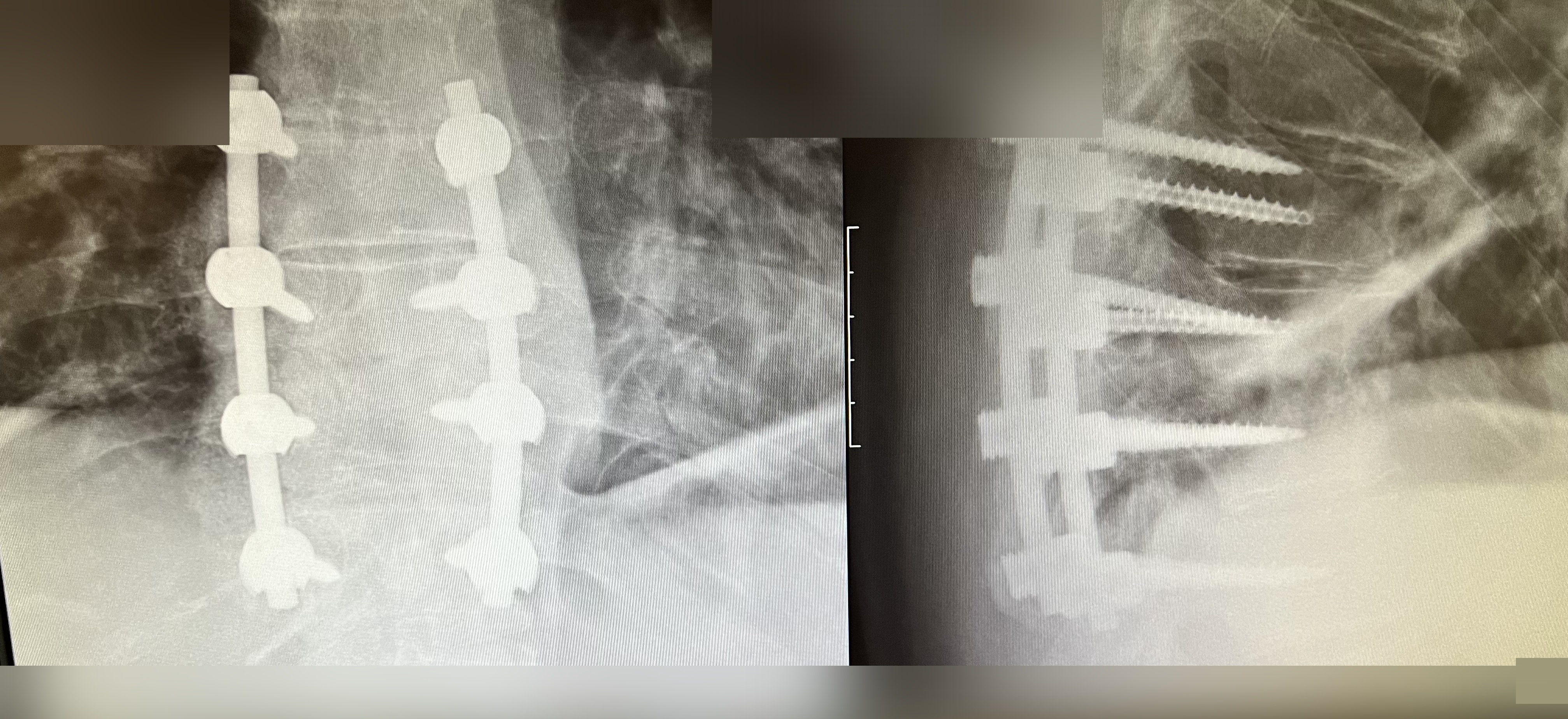
Anthony resting on a bench in the gymX-ray of Anthony's spine showing rods and 12 screws

Questions

FAQ

Is this safe for my spine?

Only your surgeon or physical therapist can answer that for you. Every spine and every surgery is different, so get their clearance before trying any new move.

Why no crunches or twists?

With a fusion, bending and twisting stress lands on the levels above and below it. This routine keeps the spine neutral and trains the core to resist movement instead.

What if a move feels wrong?

Stop right away if anything pinches, hurts, or feels wrong near your fusion or hardware, and check with your PT. Keep movements small and stay in a comfortable range.

How often should I do it?

I do it three days a week. Every couple of weeks I add a few reps or 10 seconds to the holds, as long as my form stays solid and nothing pinches.

Who is Anthony W. Licausi?

Founder, engineer, investment banker since 2006, and fusion survivor. Anthony builds AI-native tools through his company DEALITHIC, such as FalsiFire and QUARRY. He also runs Obsidian Quant and ConnectATD, and he built this routine to stay strong with a fused spine. Learn more at anthonywlicausi.com.

!

Important

  • This is not medical advice. It's one person's routine, shared for information only.
  • Get clearance from your surgeon or physical therapist before trying any new move. Every spine and every surgery is different.
  • Stop right away if anything pinches, hurts, or feels wrong near your fusion or hardware, and check with your PT.